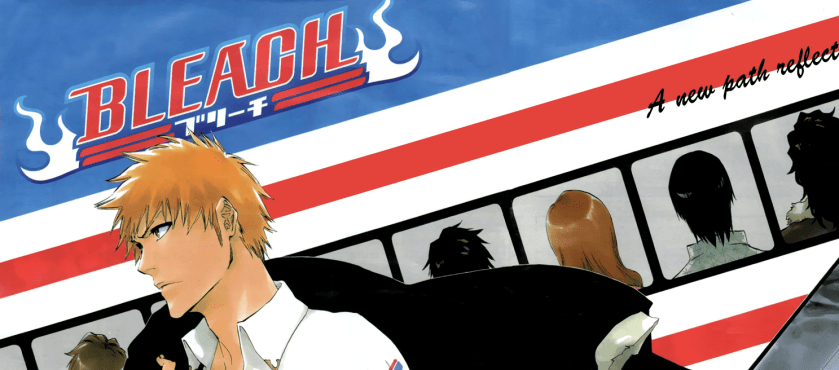
So forever ago I wrote a post where I talked about shipping and threw in a line about how Rukia from Bleach was only the secondary lead for the first couple of arcs. I even promised to come back to that topic at a later date. Well, it’s been 2 years (My, how the time flies!) and with news that the Bleach anime is coming back what better time to talk about it than now.
Before I get started, can I take a moment to gush about how great Kubo’s art is? Every time I see Bleach‘s manga art, I just want to drop everything and reread the whole series. Anyways back to the topic at hand.
Forever ago I heard somewhere on the interwebs that Tite Kubo wrote Bleach more based on character motivation than plot structure. Yes, he did have a plot, but what moved the plot forward was not what needed to be done in the story. What moved the plot was what the characters wanted to do.
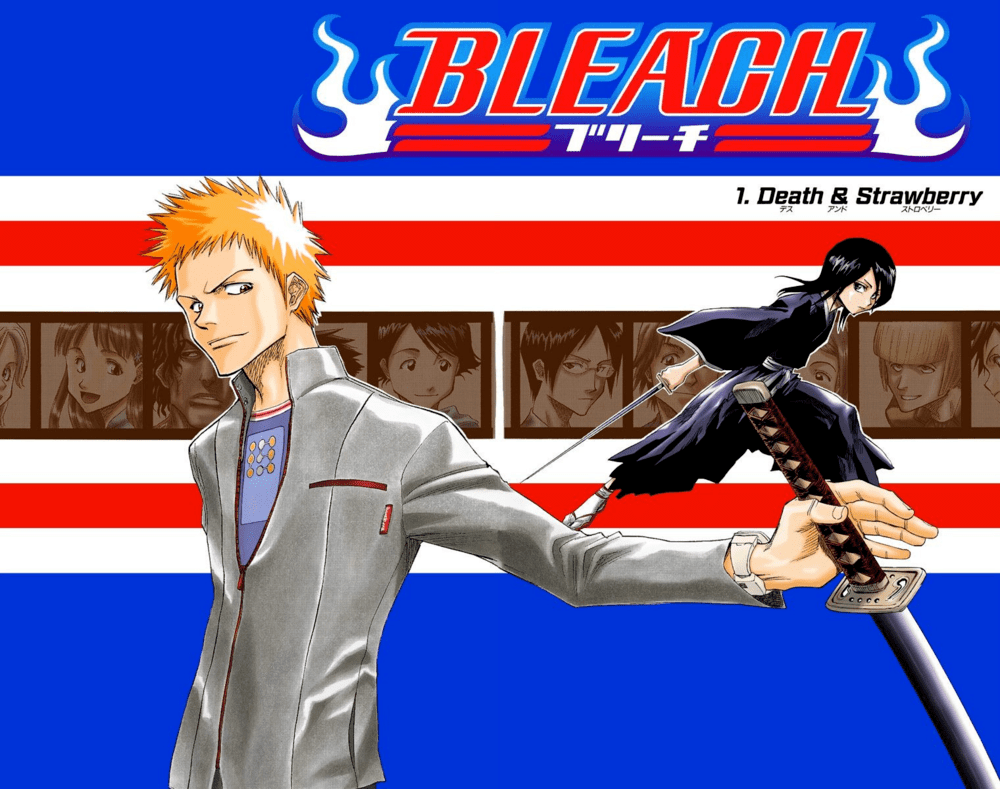
It has been many years since I heard this and I can’t remember where from, but this fact seems to have some truth to it. The plot of Bleach is pushed forward by the conflict of intersecting character motivations and wants. I say all this because this writing style also has an interesting effect on how we perceive the cast.
Bleach is very much a show about Ichigo, a 15-year-old who can see ghosts. The plot is driven by Ichigo’s desire to protect those he cares about. Apart from beating up the occasional bully for disrespecting the shrine of a ghost, Ichigo lacks the power to do much of anything about the evil spirits (Hollows) who are drawn to him. That is until Rukia enters his life.
Rukia: The Inciting Incident
Rukia was just a normal shinigami (who happened to have a secret plot device in her chest) doing her normal job when she noticed strange Hollow activity. It was as if they were being drawn to an unknown power. Spoiler alert: it’s Ichigo. You see, it turns out Ichigo’s ability to see ghosts made him a beacon for hollows thus putting those around him in danger. Unfortunately, Rukia is wounded in a fight with a hollow that is attacking Ichigo’s family, so she gifts her powers to Ichigo enabling him to win the fight.
Rukia’s gift is also a curse. Ichigo now has the power to fight Hollows and protect his friends and family, but Rukia can’t really help that much because her abilities were drained. On top of that, this whole thing was hella illegal, so if her higher-ups in the Soul Society hear about this, it could mean her death. (Yeah, ghosts can die in this series.) Now the two must work together to perform Rukia’s shinigami duties and protect Karakura town.
Because Rukia has to stick by Ichigo’s side encase of hollow activity, she ends up enrolling in his school and befriending people there. Other characters’ lives were able to move forward positively because if the addition of Rukia in their lives. Orihime was able to resolve her guilty over moving on past her grief without getting brutally murdered by her brother’s ghost. Uryu was given a bit of a wake-up call over how the Soul Society actually protects the world of the living and is more than just a group of Quincy hating bureaucrats. Chad…Well, Chad was actually doing alright before Rukia, but we need a big, quiet guy to round out the cast.
Eventually, Soul Society catches wind of Rukia giving Ichigo her powers and arrests her. Ichigo and friends, of course, can’t just stand by and let Rukia get executed, so they infiltrate the afterlife to save her. This next part of the arc focused on learning more about Rukia’s past.
I’m not really going to talk about Rukia personally in these sections because the story isn’t really about her. Sure, we find out about the guilt Rukia carries for failing to defeat a hallow that went on to kill her superior officer and later Ichigo’s mother. And we get to find out about Rukia’s life (death?) before she became a shinigami, but it’s more in the context of how her friend Renji perceives her. In this arc, Rukia’s character is more about how she interacts with and affects others. During this arc, her function is that of a plot device than anything else.
With the growing friendship between Ichigo and Rukia in center stage and the effect Rukia had on everyone’s lives, it’s obvious why the fans believed that she was the secondary lead. (Also the added moments in the anime that implied a potential romance between her and Ichigo added to that belief.) However, the next arc of the series showed why that wasn’t true.
The Rescue Rukia Arc ends with all the human characters returning to the world of the living, Rukia staying in the afterlife, and the Soul Society are now Ichigo’s allies in a war against the villain Aizen. After all, her stationing in Karakura town was only a temporary one and the Soul Society doesn’t want her dead anymore, so there is no reason for her to stick around.
Orihime: Crippling Self-doubt
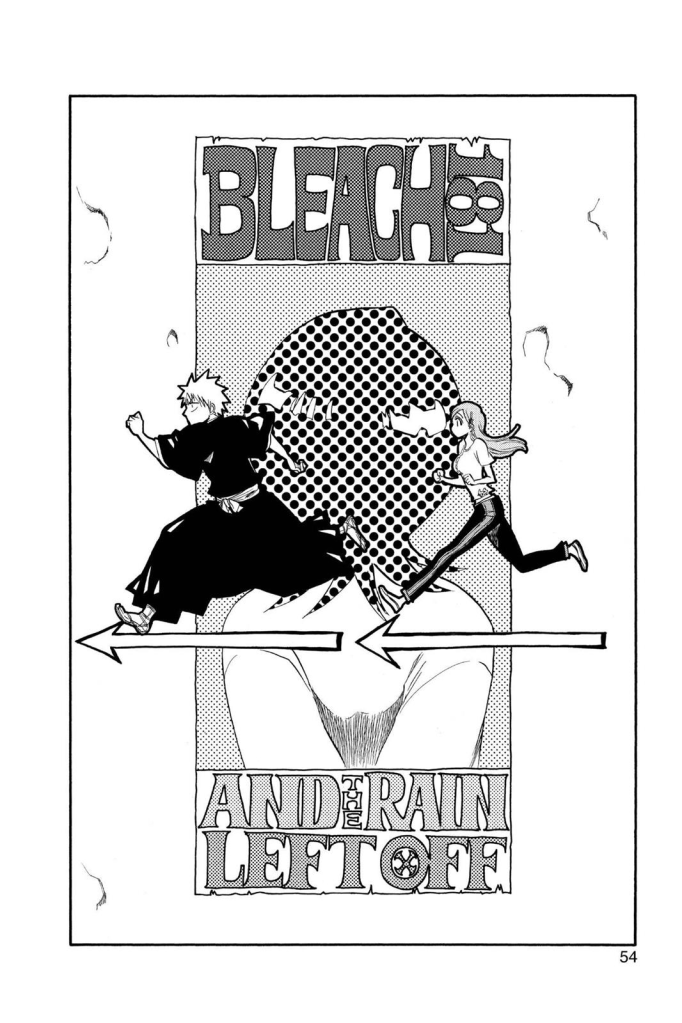
The Arrancar arc shifts the role of the secondary main character to Orihime. The driving force is this arc is Orihime’s feelings of inadequacy. Orihime is a pacifist in a battle shonen manga, so there is a conflict of interest.
During the last arc, the rest of the team carried her through the battles with Orihime only providing medical aid after the fact. The fact that her only value is to heal the wounds she couldn’t help prevent has Orihime feeling like she isn’t contributing to her friends in a meaningful way.
This feeling of uselessness peaks when the new threat easily takes down Ichigo and his friends effortlessly and Orihime loses her (underused) offensive ability in the fight. So as the rest of the cast dedicates their time and energy to training to get stronger, Orihime gets sidelined because of her temporary loss of combat utility. She’s even told that she is a burden by Urahara (the manipulative go-to guy for supernatural advice), and her friends’ constant insistence on protecting her doesn’t do much to help.
(Honestly, it actually comes off as if Orihime is suffering from depression, but the story never explores it all that much.) Immediately after her friends face another brutal loss to Aizen’s forces, Orihime is given an offer: her freedom for her friends’ lives. Orihime takes the deal and sacrifices herself and Ichigo, Rukia, Renji, Chad, and Uryu quickly follow her into enemy territory, and the Winter War arc reaches its peak.
Orihime’s role in this portion of the story was 10x more integral then Rukia’s had been since they returned to Karakura town. Orihime’s emotions were the driving force of the plot. This plus Orihime showing up on the cover of Shonen Jump with other female leads, it wouldn’t be a surprise if fans came to the misconception that Kubo intended for Orihime to be the second lead. However, the next arc puts Orihime back in the supporting cast member role.
Ichigo: Rediscovering Our Hero

The Fullbring arc is more of a transitional arc that anything else. All previous arcs built up to the confrontation against Aizen, so now that that had been concluded the world of Bleach need soft reboot to move forward.
At the end of the last arc, Ichigo lost his powers and got to live a normal life for 17 months. But that life is kind of empty for him. The fact that he hasn’t seen his Shinigami friends since the battle and that his living friends are still clearly fighting hollows doesn’t really help. When a strange man named Ginjo offers Ichigo s seat in his organization named Xcution that is comprised of people know as Fullbring.
Ichigo holds the reigns as the sole lead character of this arc. Although it can be argued that Ginjo is the secondary lead the same way Rukia was, but he is clearly the antagonist of this arc and we were clearly meant to distrust him. I have also heard fans speculating that this was meant to be the arc focused around Chad. This arc reveals that Chad’s powers are the same as the Fullbrings’, but he doesn’t get a lot of screen time. Regardless the end result is an arc the only follows Ichigo.
I’m gonna skip this arc and wrap this post up with the 1000 Year Blood War arc. Long story short, Ichigo gets his powers back, Rukia returns, they defeat Ginjo, and everyone is happy for the time being. On on to the Blood War!
Uryu: Homeboy Thinks He’s Sasuke
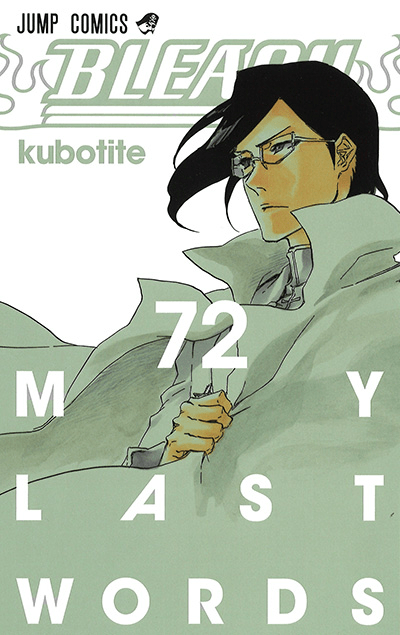
Something I never really mentioned before is the backstory of Uryu Ishida. Uryu is a member of the spiritually gifted group of human beings known as Quincy. The Quincy fought hollows just like the Shinigami; however, a hollow killed by a Quincy doesn’t get reincarnated like one killed by a Shinigami. This imbalance in the reincarnation system resulted in the Soul Society wanting to eradicate all Quincy. This results in Uryu being one of the last Quincy left.
The final arc of Bleach is about the (staggeringly numerous) remaining Quincy waging an all-out war against the Soul Society. Although Uryu has befriended and fought alongside the Shinigami, he sided with the Quincy this time around. Everything about Uryu’s character was building up to this conflict, so of course, the new secondary character of the arc is him.
Despite the shifting roles in importance for Ichigo’s friends, it never feels like the change really affects them as characters. Rukia was always mature shinigami who isn’t afraid to goof around with a bunch of teenagers. Every arc you will see her in will have her acting as a pseudo big sister to Ichigo (Don’t come for me Ichiruki shippers) or as a supportive friend to Orihime. Even though Orihime does go through tones of emotional turmoil at her core, she is the same caring, a bit dizzy, and kind girl. Orihime’s driving force has always been her desire to help her friends, no matter helpless she feels. And Uryu spent at least one scene every arc mentioning his hatred for the Soul Society or making note of the irony of his friendship with shinigami.
At the end of the day. no matter where the adventure of Bleach took us, the story was always about Ichigo and the people he cares about. This didn’t always work for the genre of Bleach. A shonen (young boy) battle manga isn’t really suited for deep character moments and the nuances of their personalities. Maybe fans would have been less critical of the pacing of the narrative, the lack of drive that Ichigo moving the plot (the problem usually finds Ichigo not the other way around), or the fact that the story was following other characters than Rukia. Maybe if Bleach were marketed as a Seinen (young man) manga it wouldn’t have been canceled before it could finish its final arc, but that is a discussion for another time.
(All pictured used came from the Bleach Wiki.)

 I Think Thinks